
Palo Alto · Market note
Higher Mortgage Rates: Should Palo Alto Sellers Change Their Plans?
The September Fed minutes, released October 7, leave another increase open before year end and commit to nothing. On an illustrative Palo Alto loan, moving from 6.5% to 7.5% adds about $2,222 a month — enough to change what a buyer will pay, and not enough on its own to decide whether you list.

- Fed target range
- 3.75%–4%
- Raised a quarter point at the September 15–16 meeting. The minutes leave another increase open this year and commit to nothing
- Monthly payment at 6.50%
- $20,919
- Principal and interest on a $3,309,600 loan, 30-year fixed
- The same loan at 7.50%
- $23,141
- One percentage point higher, on the same principal and term
- The difference
- $2,222 a month
- About $26,700 a year. Hypothetical scenarios, not loan offers, and before property taxes, insurance and other ownership costs
Another Fed headline. Another reason to wonder whether this is still a good time to sell.
The September meeting minutes, released October 7, show that most Fed participants considered another rate increase likely to be appropriate before year-end. Meanwhile, higher borrowing costs are giving buyers more to think about.
For Palo Alto homeowners, the useful question is how that changes the buyers, competition, and timing for your particular home.
My approach: review those conditions before changing your plans. A Fed headline alone isn’t enough to decide whether to list or wait.
What the Fed said, and what it means for mortgages
At its September meeting, the Fed raised its target range by a quarter percentage point, to 3.75%–4%. The minutes leave room for another increase this year, while making clear that future decisions depend on incoming information. They do not commit the Fed to a December increase.1
The Fed’s policy rate influences borrowing conditions, but it does not directly set the rate on a 30-year mortgage. Fixed mortgage rates often move with longer-term bond yields, including the 10-year Treasury; the gap between them also changes. The actual quote also depends on the loan terms, the lender’s pricing and the borrower.2
The 10-year Treasury measure published through FRED was 5.31% on October 5 and 5.27% on October 6. Those are dated observations, not a live mortgage quote.3
The practical point for sellers: buyers’ financing can change before the next Fed meeting. Waiting for an announcement does not guarantee a better selling window.
A small rate change can mean a meaningful budget change
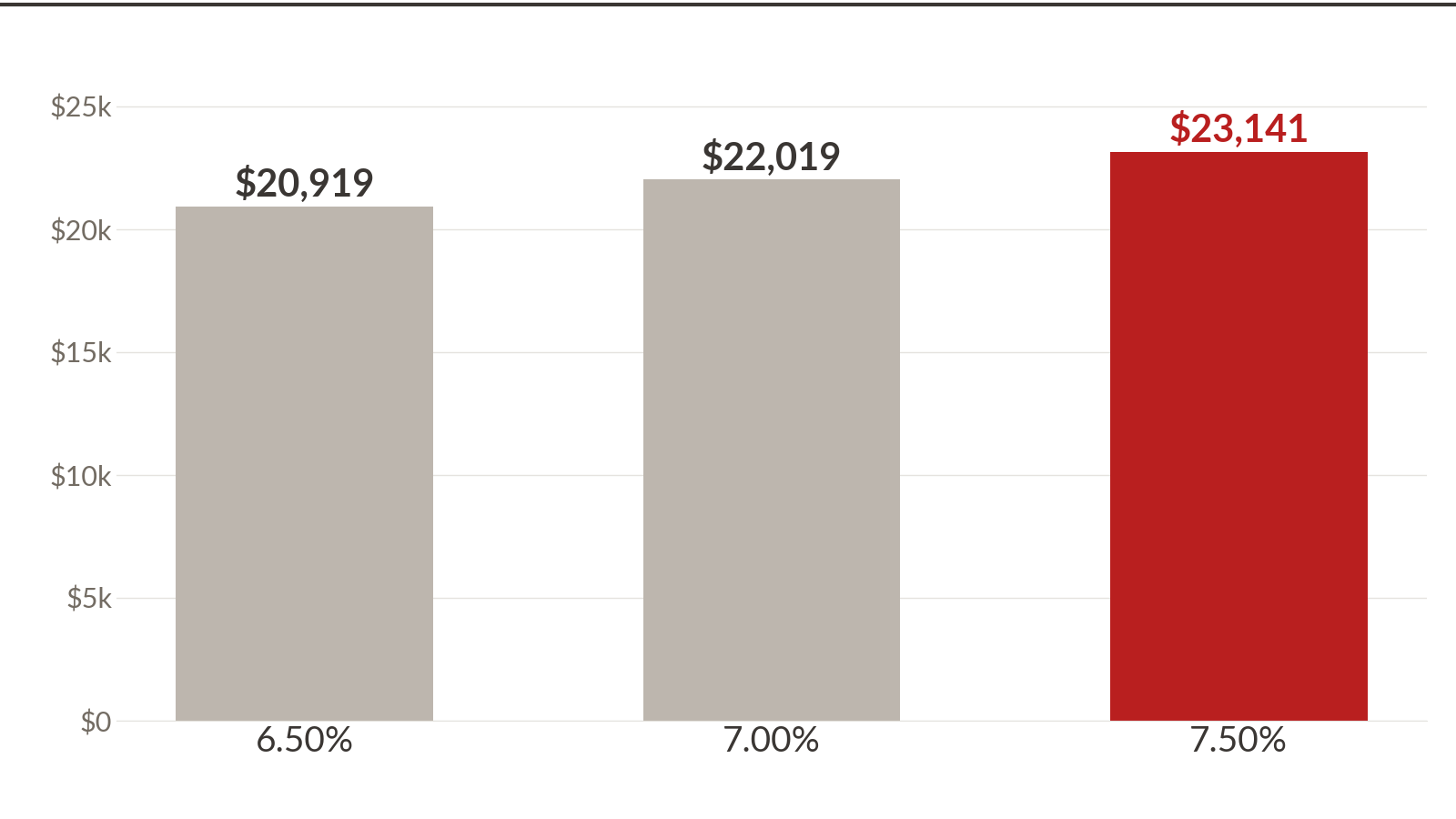
Consider an illustrative $4.137 million purchase with 20% down: a loan of $3,309,600. On a fully amortizing, 30-year fixed-rate loan:
| Interest rate | Monthly principal and interest |
|---|---|
| 6.50% | $20,919 |
| 7.00% | $22,019 |
| 7.50% | $23,141 |
Moving from 6.5% to 7.5% adds about $2,222 a month, or approximately $26,700 a year, for the same loan amount.
These are hypothetical scenarios, not available loan offers. They exclude property taxes, insurance, and other ownership costs.4
A buyer may respond by increasing the down payment, reducing the purchase budget, considering different financing, or waiting. I can’t assume which choice they will make. But sellers should recognize that the same house can represent a different financial commitment as rates change.
Palo Alto has cash buyers. That doesn’t make it immune.
In my analysis of 299 Palo Alto single-family sales that went into contract in 2026 and closed by September 25, 38% were recorded as all-cash purchases.5
That is useful context. It does not mean rates are irrelevant to the remaining buyers, or that cash buyers will pay any price. They still compare alternatives and decide what a home is worth to them.
The timing of the data matters, too. Sales closed by September 25 cannot tell us how buyers will respond to October’s financing conditions.
If your home is coming to market now, I would look closely at its current competition, recent comparable sales, and what fresh showings and offers tell me.
What I would review before you list
The homes your buyers can choose instead.
Last spring’s sale may be useful background, but buyers are choosing among today’s options. I would compare your home’s condition, layout, location, and asking price with the relevant alternatives, then consider what recent sales tell us.
The preparation that deserves your time and money.
This is a good moment to be selective. I help sellers decide what to improve, what to leave alone, and how to present the home clearly. A larger renovation budget is not automatically a better strategy; sometimes focused work is the right fit.
The plan for the first weeks on the market.
I want the price, photography, presentation, and outreach to work together from the start. Then I watch the response: inquiries, showings, feedback, and offers. If interest falls short, I’ll look at why and recommend what to change, and you decide.
The cost of waiting in your own life.
Your move, carrying costs, preparation schedule, and flexibility matter alongside market conditions. Waiting may make sense for one owner and create unnecessary expense or disruption for another.
Should you sell now or wait?
I would want to understand your home and your plans before recommending either.
If selling is on your mind, send me your address and approximate timing. Together we can review the competition, discuss a realistic pricing approach, and identify what I would, and wouldn’t, do before listing.
You do not need a finished renovation or a firm moving date to start that conversation.
Discuss my home’s price and timing
Or call or text Maggie: 650.709.5588. English and Mandarin.